




Introduction
The mobile app industry is evolving rapidly, and businesses must create applications that not only look visually appealing but also deliver exceptional performance and scalability. Whether you’re launching an iOS app for Apple users or developing an Android app for a global audience, success depends on much more than just coding. A well-designed user interface (UI), an intuitive user experience (UX), and a scalable architecture are essential for attracting users, improving engagement, and supporting long-term business growth.
For iOS applications, users expect clean interfaces, smooth navigation, and seamless interactions that follow Apple’s Human Interface Guidelines. On the Android side, developers must build scalable applications capable of supporting different devices, operating system versions, and increasing user traffic without compromising performance.
In this blog, we’ll explore why UI/UX design is crucial for iOS app success, how to build scalable Android applications, and how Teleons helps businesses develop high-performing mobile applications that deliver outstanding user experiences.
Why UI/UX Design Matters for Mobile App Success
UI (User Interface) focuses on the visual appearance of an application, while UX (User Experience) emphasizes usability, accessibility, and how users interact with the app. Together, they determine whether users enjoy using your application or abandon it after the first few interactions.
A professionally designed mobile application helps businesses:
Increase user engagement
Improve customer satisfaction
Reduce app abandonment
Strengthen brand identity
Increase app store ratings
Improve conversion rates
Encourage customer loyalty
Users often decide within seconds whether they will continue using an app, making UI/UX one of the most important factors in mobile app development.
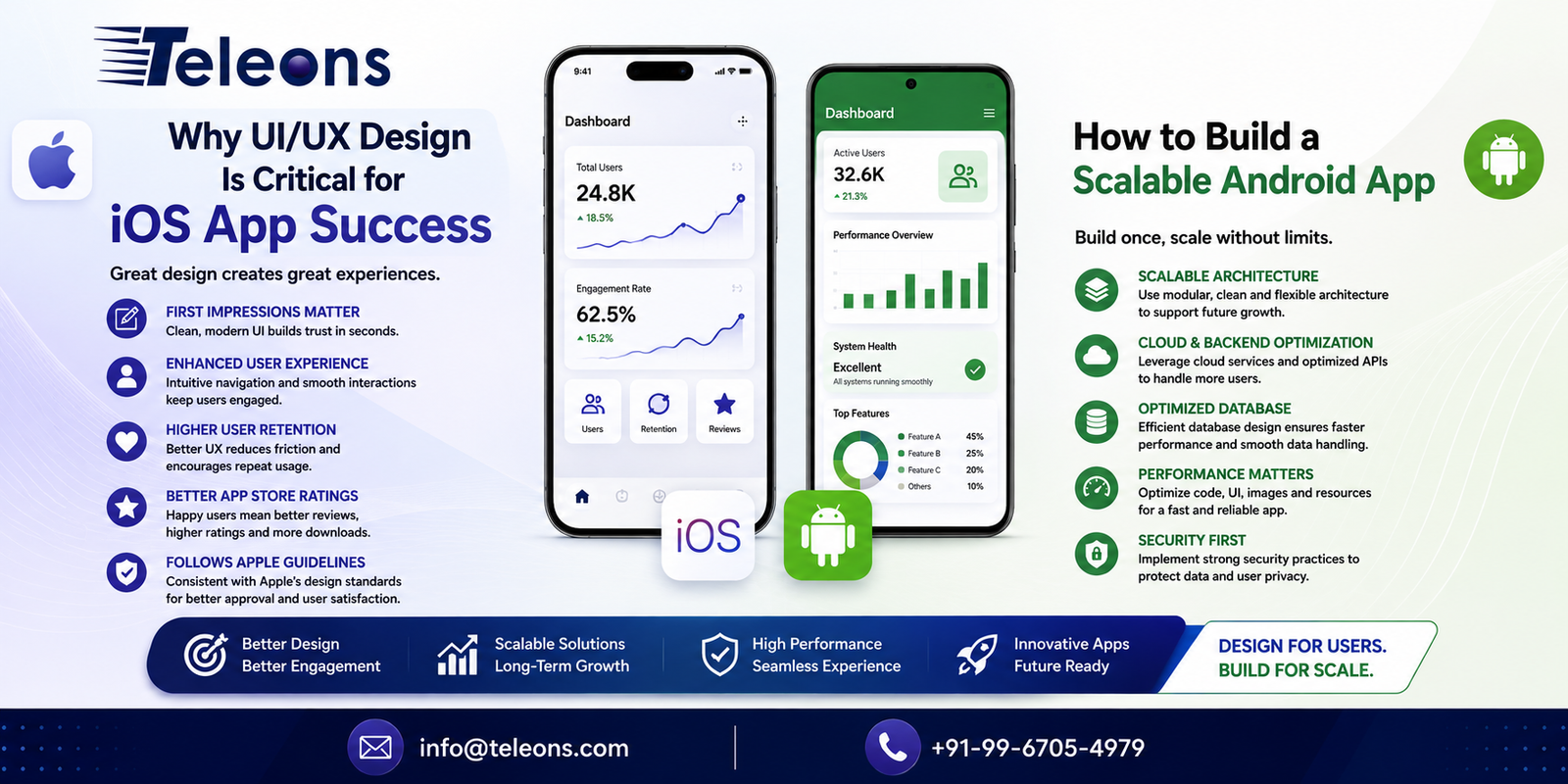
Why UI/UX Design Is Critical for iOS App Success
Apple users have high expectations for design quality, consistency, and performance. Apps that follow Apple’s design standards are more likely to gain user trust, receive positive reviews, and achieve long-term success on the App Store.
Key Reasons UI/UX Matters for iOS Apps
1. First Impressions Matter
A clean, modern, and visually appealing interface creates a positive first impression. Users are more likely to continue using an app that feels intuitive and professionally designed.
2. Improves User Retention
Simple navigation, fast interactions, and consistent layouts make it easier for users to accomplish tasks, increasing retention and reducing uninstall rates.
3. Supports Apple’s Design Guidelines
Following Apple’s Human Interface Guidelines ensures your application feels familiar to iPhone and iPad users while improving App Store approval chances.
4. Increases Customer Trust
Professional UI design enhances credibility and builds confidence in your brand, especially for eCommerce, healthcare, finance, and enterprise applications.
5. Higher App Store Ratings
Users frequently rate apps based on usability. Better UI/UX often leads to improved reviews, higher ratings, and increased downloads.
Essential UI/UX Elements for iOS Apps
UI/UX Element Business Benefit
Clean Navigation Improves usability
Consistent Typography Better readability
Simple User Flows Faster task completion
Fast Loading Screens Better user satisfaction
Accessibility Features Inclusive user experience
Smooth Animations Premium user interactions
Dark Mode Support Enhanced visual comfort
Responsive Layouts Optimized for all Apple devices
Common UI/UX Mistakes to Avoid
Many apps fail because of poor design decisions. Avoid these common mistakes:
Cluttered interfaces
Complex navigation
Small touch targets
Slow loading screens
Poor color contrast
Inconsistent design elements
Ignoring accessibility
Too many user actions
Confusing onboarding screens
How to Build a Scalable Android App
Android applications often support thousands—or even millions—of users across a wide range of devices. Scalability ensures that your application continues to perform efficiently as your business grows.
A scalable Android app is designed to handle increased traffic, additional features, larger databases, and growing user demands without affecting performance.
Steps to Build a Scalable Android App
1. Choose the Right Architecture
Selecting a modern architecture such as MVVM or Clean Architecture helps developers organize code efficiently, making future updates and maintenance easier.
2. Design a Flexible Backend
A scalable backend allows your application to process increasing numbers of users, requests, and transactions while maintaining speed and reliability.
3. Optimize Database Performance
Efficient database design minimizes response times and ensures smooth data retrieval as your application grows.
4. Use Cloud Infrastructure
Cloud platforms provide flexible computing resources that can automatically scale based on application demand.
5. Build Modular Code
Modular development simplifies maintenance, reduces bugs, and allows developers to add new features without affecting existing functionality.
6. Focus on Performance Optimization
Performance improvements include:
Image optimization
Code optimization
Faster API responses
Efficient memory management
Background task optimization
7. Strengthen Security
Implement:
Secure authentication
Data encryption
API security
User permission management
Regular security updates
Features of a Scalable Android Application
Feature Importance
Modular Architecture Easier maintenance
Cloud Integration Supports growth
API Optimization Faster performance
Secure Authentication Better security
Database Optimization Improved speed
Responsive UI Better user experience
Offline Support Enhanced reliability
Analytics Integration Performance monitoring
Best Practices for Mobile App Development
To create successful mobile applications, businesses should follow these best practices:
Planning
Define business goals
Identify target audience
Analyze competitors
Create a feature roadmap
Design
Focus on user-centered design
Maintain visual consistency
Optimize accessibility
Design intuitive navigation
Development
Write clean, scalable code
Follow coding standards
Implement secure APIs
Optimize app performance
Testing
Functional testing
UI testing
Performance testing
Security testing
Cross-device compatibility testing
Maintenance
Monitor performance
Fix bugs regularly
Release feature updates
Improve based on user feedback
iOS vs Android Development Comparison
Aspect iOS Development Android Development
Design Focus Premium UI/UX Device flexibility
Devices Limited Apple devices Thousands of device models
Programming Swift Kotlin / Java
Store Apple App Store Google Play Store
Testing Fewer devices Multiple screen sizes
Scalability Strong ecosystem High scalability requirements
Why Choose Teleons for Mobile App Development?
At Teleons, we specialize in designing and developing high-performance mobile applications for businesses of all sizes. Our team combines creative UI/UX design with scalable development practices to deliver iOS and Android applications that are secure, fast, and future-ready. From concept and wireframing to development, testing, deployment, and ongoing maintenance, we provide end-to-end mobile app development solutions tailored to your business goals. Whether you need an enterprise application, eCommerce app, healthcare platform, or custom business solution, Teleons ensures exceptional user experiences and long-term scalability.
Conclusion
Creating a successful mobile application requires the perfect balance between outstanding design and scalable technology. A well-designed UI/UX helps iOS applications attract and retain users by delivering intuitive, visually appealing experiences, while scalable Android development ensures applications remain fast, secure, and reliable as businesses grow. By following modern design principles, adopting scalable architectures, and partnering with experienced developers like Teleons, businesses can launch mobile applications that drive engagement, improve customer satisfaction, and support long-term digital growth.
Build Powerful Mobile Apps with Teleons
Ready to transform your app idea into a high-performing digital solution? Teleons provides expert iOS app development, Android app development, UI/UX design, cross-platform development, cloud integration, API development, app maintenance, and scalable mobile solutions for startups and enterprises. Contact our team today to build secure, user-friendly, and future-ready mobile applications that drive business growth.
Company Name: Teleons
📞: +91-99-6705-4979
Email: info@teleons.com
Website: https://teleons.com/
FAQs
1. Why is UI/UX important for iOS app development?
UI/UX improves usability, increases customer satisfaction, boosts App Store ratings, and enhances user retention.
2. What makes an Android app scalable?
A scalable Android app uses modular architecture, cloud infrastructure, optimized databases, secure APIs, and efficient coding practices to handle growing users and features.
3. What is the difference between UI and UX?
UI focuses on the visual design and interface of an app, while UX focuses on the overall user experience, usability, and interaction.
4. Which programming languages are used for iOS and Android development?
Swift is commonly used for iOS development, while Kotlin and Java are widely used for Android app development.
5. How does scalability benefit a mobile app?
Scalability allows an app to handle increased traffic, users, and data without compromising speed, reliability, or performance.
6. Why choose Teleons for mobile app development?
Teleons offers custom iOS and Android app development, UI/UX design, scalable architecture, cloud integration, testing, deployment, and ongoing maintenance to help businesses build secure and high-performing mobile applications.


Related Posts
App Store Optimization: How to Get More App Downloads
Building a mobile app is only the first step. The next challenge is getting people to discover, download and use it. With thousands of apps…
Read More
How Mobile Apps Help Businesses Improve Customer Engagement
Introduction Customer engagement has become a critical factor in building a successful business. Customers today expect brands to be accessible, responsive, personalized, and convenient across…
Read More