




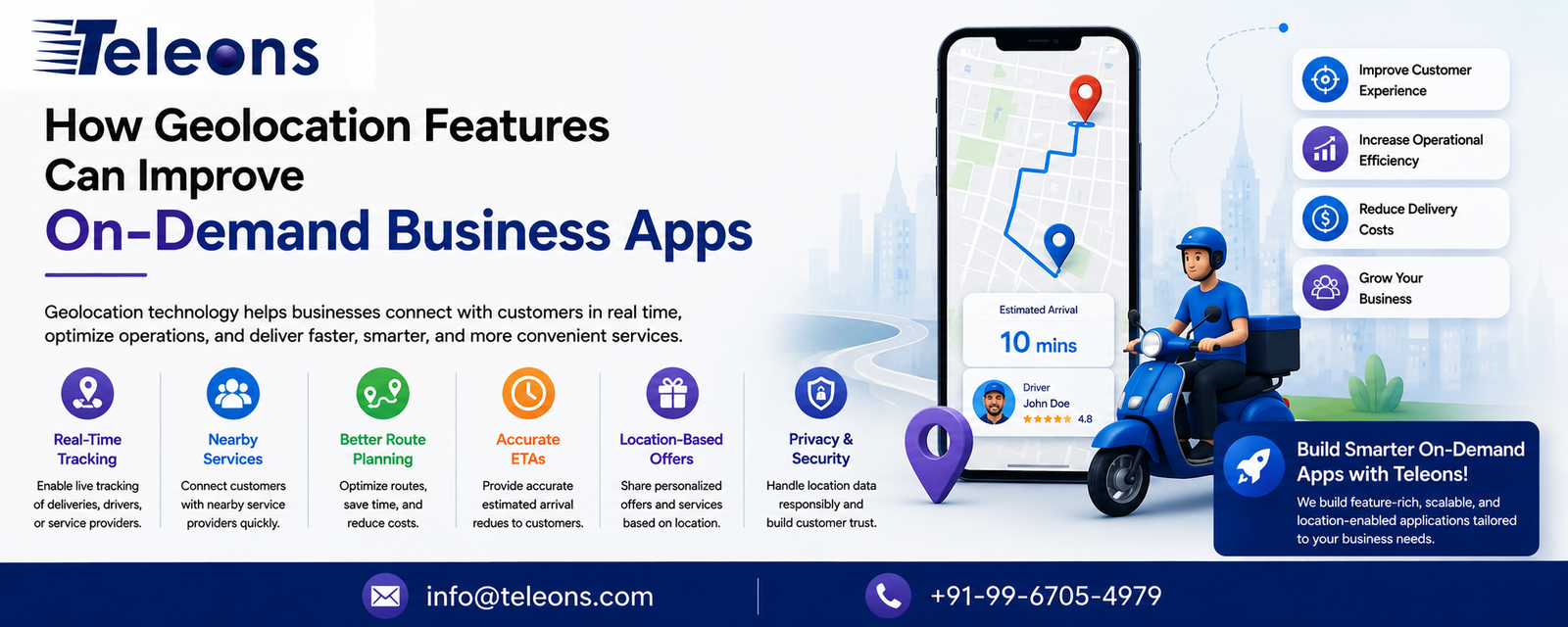
On-demand business apps are designed to provide products and services exactly when customers need them. Whether it is food delivery, transportation, home services, logistics, or local commerce, geolocation features can make these applications more convenient, responsive, and efficient. By using location-based technology, businesses can connect customers, service providers, delivery teams, and operations in real time.
What Is Geolocation in Mobile Apps?
Geolocation is the technology used to determine the approximate physical location of a mobile device. Depending on the application and user permissions, location information can be obtained through GPS, Wi-Fi, mobile networks, and other technologies.
For an on-demand app, geolocation can be used to identify customer locations, locate nearby service providers, track deliveries, calculate distances, and provide location-based services.
How Geolocation Improves On-Demand Business Apps
1. Enables Real-Time Tracking
One of the biggest benefits of geolocation is real-time tracking. Customers can see the location and progress of a delivery person, driver, technician, or other service provider. This provides greater visibility and reduces uncertainty about arrival times.
For example, a delivery application can allow customers to track an order from the time it leaves the business until it reaches their location.
2. Helps Connect Customers With Nearby Services
Location data can help an application identify service providers close to the customer. This can be particularly useful for businesses offering home repairs, transportation, cleaning, healthcare services, food delivery, and other location-dependent services.
Connecting customers with nearby providers can potentially reduce waiting times and improve service efficiency.
3. Improves Delivery Management
Geolocation can help businesses monitor delivery routes and provide drivers with useful location information. Operations teams can gain better visibility into deliveries and identify potential delays.
Businesses can also use location data to improve delivery planning based on distance, service areas, and available resources.
4. Provides More Accurate ETAs
Estimated arrival times are important in on-demand services. By combining location information with route and distance data, apps can provide customers with more useful estimates.
Although traffic and other external conditions can affect actual arrival times, location-based tracking can make ETA updates more responsive.
5. Supports Location-Based Personalization
Geolocation can allow businesses to tailor parts of the app experience according to a customer’s location. For example, users may see nearby stores, available services, delivery areas, or location-specific offers.
This can create a more relevant experience while helping businesses promote services in specific geographic markets.
6. Helps Businesses Manage Service Areas
Businesses operating in multiple locations can use geolocation to determine whether a customer falls within a supported service area. This can help prevent orders or bookings from being accepted where delivery or service is unavailable.
7. Improves Communication Between Users and Service Providers
Location sharing can make it easier for customers and service providers to find each other. This is particularly useful when an exact address is difficult to locate or when a provider needs directions to a customer’s current location.
Geolocation Features Businesses Can Add to an App
Depending on the business model, useful geolocation features may include:
Real-time location tracking
GPS-based navigation
Nearby service discovery
Location-based search
Delivery tracking
Distance calculation
Estimated arrival times
Geofencing
Service-area detection
Location-based notifications
Route optimization
Location sharing
The right features depend on the application’s purpose and the needs of its users.
Importance of Privacy and Permissions
Location data can be sensitive, so businesses should handle it responsibly. Apps should request appropriate permissions, clearly explain why location access is required, and collect only the information necessary for the intended functionality.
Following applicable privacy requirements and providing users with appropriate control over location permissions can help create greater trust.
How Teleons Can Help
Developing an effective location-enabled application requires more than simply adding GPS functionality. The feature needs to work smoothly with maps, APIs, databases, user permissions, notifications, and the application’s overall architecture.
Teleons can help businesses develop customized mobile and web applications with functionality suited to their operational requirements. From location-based services to real-time tracking and business automation, a well-designed application can help organizations deliver more convenient and efficient on-demand services.
Conclusion
Geolocation has become an important technology for many on-demand business applications. Real-time tracking, nearby service discovery, route information, accurate ETAs, and location-based personalization can improve both customer convenience and business operations.
When implemented thoughtfully and with appropriate privacy controls, geolocation features can help on-demand businesses create faster, more transparent, and more connected digital experiences.
Build a Smarter On-Demand App With Teleons
Give customers better visibility, faster services, and a more convenient app experience with location-based functionality. Contact Teleons to discuss your requirements for a customized mobile or web application.
Website: Teleons
Phone: +91-99-6705-4979
Email: info@teleons.com
FAQ
1. What is geolocation in an on-demand app?
Geolocation uses technologies such as GPS and network-based positioning to determine a user’s or service provider’s approximate location and enable location-based functionality.
2. How does geolocation improve customer experience?
It can provide features such as real-time tracking, nearby service discovery, location-based services, and more useful arrival-time updates.
3. Which businesses can benefit from geolocation features?
Food delivery, transportation, logistics, healthcare, home services, retail, courier services, and other location-dependent businesses can benefit from geolocation functionality.
4. Can geolocation help with delivery tracking?
Yes. Geolocation can allow customers and businesses to track delivery progress and provide location-based status updates.
5. Is user permission required for location access?
In many cases, mobile operating systems require applications to request permission before accessing certain types of location data. Apps should clearly explain why location access is needed.
6. Can Teleons develop location-based mobile applications?
Yes. Teleons can develop customized applications that incorporate location-based functionality according to a business’s requirements and application model.


Related Posts
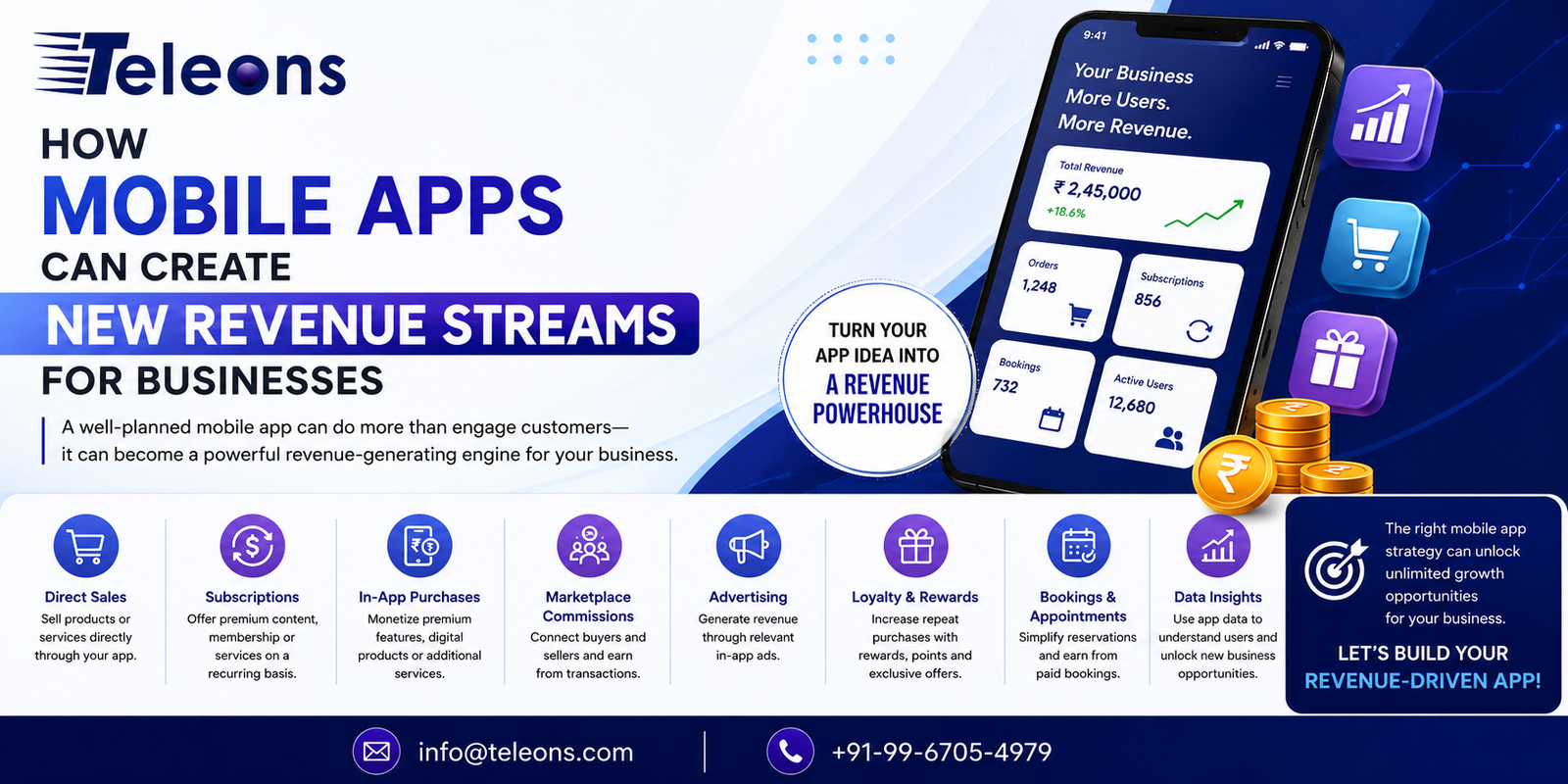
How Mobile Apps Can Create New Revenue Streams for Businesses
A mobile app is no longer just a digital extension of a business website. For many companies, it can become a new revenue-generating channel that…
Read More
Mobile App Development for Mumbai SMEs: What Businesses Should Know
Mumbai is home to businesses across retail, restaurants, healthcare, education, finance, logistics, real estate, professional services and eCommerce. As customers increasingly use smartphones to discover…
Read More