




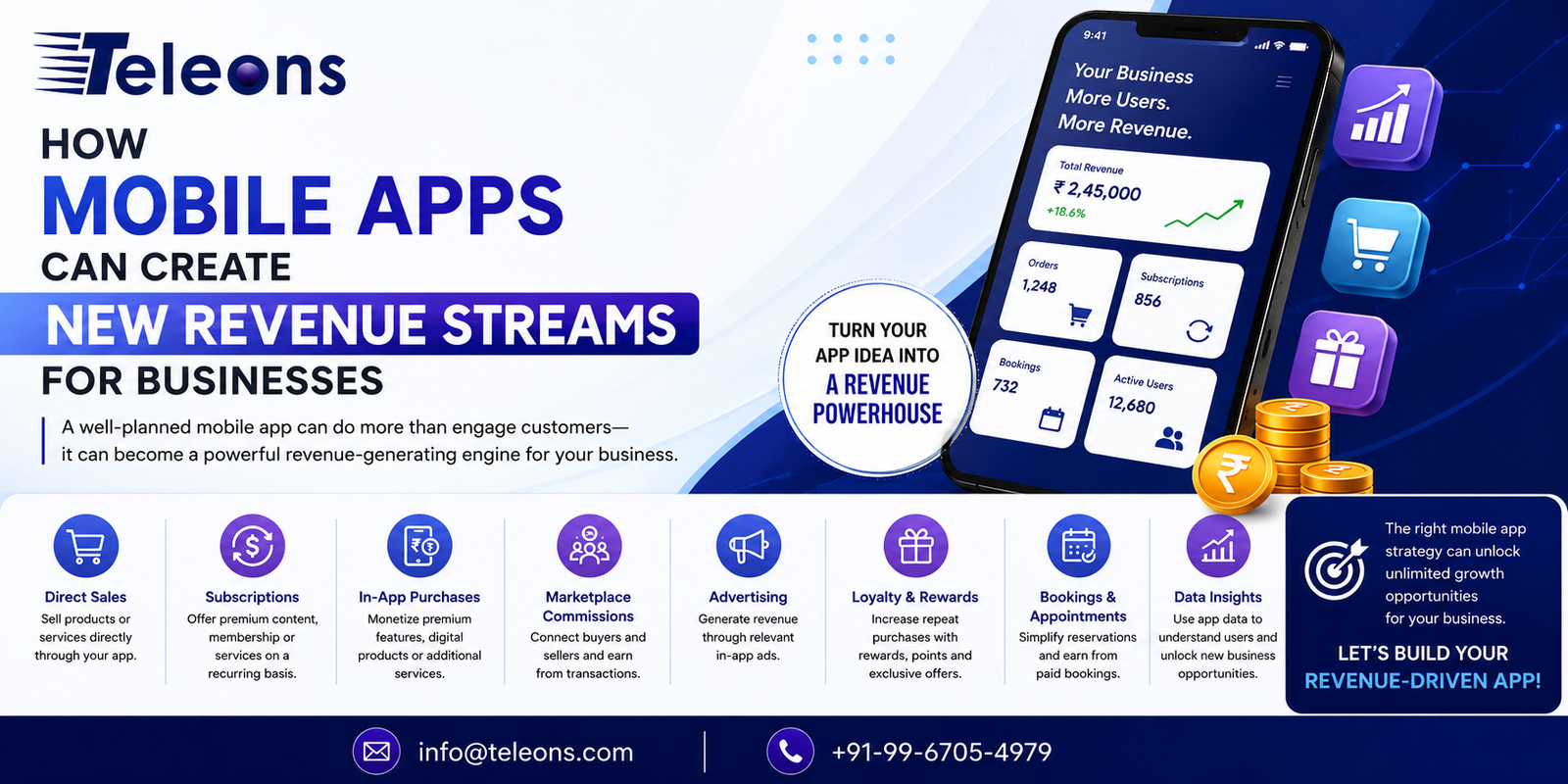
A mobile app is no longer just a digital extension of a business website. For many companies, it can become a new revenue-generating channel that creates additional ways to sell products, deliver services, retain customers, and build recurring income.
From eCommerce and subscription services to marketplaces, bookings, in-app purchases, advertising, and premium features, mobile applications give businesses opportunities to monetize their digital audience in ways that traditional channels may not support.
The global shift toward mobile-first customer experiences has also changed customer expectations. People increasingly want to discover, purchase, communicate, book, track, and manage services directly from their smartphones.
For businesses, this creates an important opportunity:
Instead of using an app only to support existing customers, how can you use it to generate new revenue?
Let’s explore the most effective approaches.
1. Direct Product and Service Sales
One of the simplest ways an app can generate revenue is by allowing customers to purchase directly.
An eCommerce or business application can provide:
Product browsing
Personalized recommendations
In-app checkout
Multiple payment options
Order tracking
Customer support
Exclusive offers
A well-designed purchasing experience can reduce friction between product discovery and checkout.
For service businesses, the same principle can apply to bookings, appointments, consultations, subscriptions, and other paid services.
2. Subscription-Based Revenue
Subscriptions can turn a mobile app into a predictable recurring-revenue channel.
Businesses can offer customers access to premium content, services, tools, or benefits in exchange for a monthly or annual fee.
Examples include:
Fitness applications
Education platforms
Productivity apps
Entertainment services
Professional tools
Membership platforms
A subscription model can be particularly effective when the app delivers ongoing value rather than a one-time experience.
The key is to give customers a clear reason to remain subscribed.
3. Freemium Business Models
The freemium model allows users to access basic functionality for free while charging for advanced features.
For example:
Free plan → Basic features
Premium plan → Advanced features + additional benefits
Premium features could include:
Advanced analytics
Additional storage
Exclusive content
Automation
Personalization
Ad-free experiences
Priority support
This model allows businesses to attract a large user base while creating opportunities to convert highly engaged users into paying customers.
4. In-App Purchases
In-app purchases allow users to purchase digital or additional features directly through an application.
Depending on the business model, this could include:
Premium content
Digital products
Virtual items
Feature upgrades
Additional services
Credits
Exclusive experiences
For businesses with highly engaged users, small purchases can collectively become a meaningful revenue stream.
5. Commission-Based Marketplaces
Businesses can create apps that connect buyers and sellers and generate revenue by charging a commission on transactions.
Examples include:
Food delivery platforms
Service marketplaces
Travel platforms
Real estate marketplaces
Freelancer platforms
Booking applications
For example, an app could connect customers with service providers and charge a percentage of every completed transaction.
This approach allows businesses to generate revenue without necessarily owning or delivering every product or service themselves.
6. Advertising Revenue
Free apps can generate revenue by displaying relevant advertisements.
Potential formats include:
Banner ads
Native advertising
Sponsored content
Video advertisements
Interstitial ads
However, advertising should be implemented carefully.
Too many advertisements can negatively affect the user experience and increase app abandonment.
Businesses should balance monetization with usability.
7. Premium Memberships
An app can provide customers with exclusive benefits through paid memberships.
Membership benefits could include:
Discounts
Early access
Free delivery
Exclusive products
Premium content
Priority customer service
Special rewards
This model can increase both revenue and customer loyalty.
8. Loyalty and Rewards Programs
A mobile app can turn loyalty programs into a continuous revenue-generation strategy.
Businesses can reward customers for:
Purchases
Referrals
Repeat orders
Reviews
App engagement
Membership renewals
For example, customers could collect points through purchases and redeem them for discounts or exclusive offers.
The objective isn’t simply to give away discounts. It is to encourage repeat purchasing behavior.
9. Personalized Product Recommendations
Mobile apps can use customer behavior and preferences to provide personalized recommendations.
For example, an eCommerce app can recommend:
Products related to previous purchases
Complementary products
Personalized offers
Frequently purchased items
New products matching customer interests
Better personalization can increase opportunities for cross-selling and upselling.
10. Paid Premium Features
Businesses can provide a basic app experience and charge customers for specific premium capabilities.
For example:
A business productivity app might provide basic task management for free while charging for:
Team collaboration
Advanced reporting
Automation
Integrations
Custom dashboards
This creates a direct connection between product value and monetization.
11. Booking and Appointment Revenue
Apps can simplify bookings while creating new revenue opportunities.
Businesses can allow customers to book:
Appointments
Hotels
Restaurants
Events
Consultations
Classes
Healthcare services
Professional services
Businesses can charge customers directly, collect booking fees, or generate revenue through commissions.
12. Digital Products and Content
Businesses can use mobile applications to sell digital products such as:
Online courses
eBooks
Premium reports
Training programs
Templates
Tutorials
Digital memberships
This can be especially useful for education, consulting, media, professional services, and creator-focused businesses.
13. Affiliate Revenue
A business app can recommend third-party products or services and earn commissions from qualifying purchases or referrals.
For example, an application could recommend relevant:
Products
Software
Financial services
Travel services
Courses
Business tools
Affiliate monetization can provide an additional revenue stream without requiring the business to develop every product itself.
14. B2B Revenue Opportunities
Mobile apps aren’t only useful for consumer businesses.
B2B companies can develop applications for:
Workforce management
Field service operations
Inventory management
Sales teams
Customer portals
Logistics
Business reporting
Businesses can monetize these applications through licensing, subscriptions, per-user pricing, or enterprise packages.
Choosing the Right App Monetization Model
Not every revenue model works for every business.
The right approach depends on:
Target audience + product value + customer behavior + industry + pricing strategy
For example:
Business Type Potential Revenue Model
eCommerce Product sales, memberships, subscriptions
Education Courses, subscriptions, premium content
Fitness Memberships, subscriptions, premium plans
Marketplace Transaction commissions
SaaS Subscriptions, premium features
Media Advertising, subscriptions
Services Bookings, memberships, premium services
B2B Licensing, subscriptions, per-user pricing
Some businesses may also combine multiple models.
For example:
Free app + advertising + premium subscription + in-app purchases
can create several complementary revenue streams.
What Makes an App Successful at Generating Revenue?
Building an app isn’t enough.
The application needs to provide a compelling reason for users to download it, return regularly, and eventually spend money.
Important factors include:
Excellent User Experience
A complicated checkout process or confusing navigation can reduce conversions.
Strong Performance
Slow loading times and crashes can cause users to abandon an application.
Personalization
Relevant recommendations and offers can make the experience more valuable.
Security
Users need confidence when providing personal information and making payments.
Continuous Improvement
User feedback and analytics should guide future updates.
Clear Value Proposition
Users should immediately understand why the app is worth using.
How Teleons Can Help Businesses Build Revenue-Generating Apps
Teleons helps businesses transform digital ideas into functional mobile and web applications.
From Android and iOS app development to cross-platform solutions, UI/UX, APIs, MVP development, and custom business applications, the right technology foundation can help businesses create applications designed around customer needs and commercial objectives.
A successful app should not simply exist in the App Store or Play Store. It should contribute to measurable business outcomes.
Whether your goal is to launch a subscription platform, eCommerce application, marketplace, booking app, or custom business solution, a carefully planned mobile application can become an important part of your revenue strategy.
Conclusion
Mobile apps can create much more than another customer touchpoint.
They can become revenue engines.
From direct sales and subscriptions to commissions, advertising, premium features, memberships, and digital products, businesses have multiple ways to monetize their applications.
The key is choosing a revenue model that matches your customers and delivers genuine value.
Before developing an app, ask:
What problem does it solve?
Why will customers continue using it?
What value are they willing to pay for?
Which monetization model fits their behavior?
When these questions are answered strategically, mobile app development can become an investment in long-term business growth rather than simply another technology project.
Ready to Turn Your Mobile App Idea into a Revenue Stream?
A well-planned mobile application can do more than improve customer engagement—it can open new opportunities for business growth and recurring revenue.
Teleons can help you plan, design, develop, and scale a mobile application around your business goals.
Have an app idea? Talk to Teleons today and explore the right technology and monetization strategy for your business.
Website: Teleons
Phone: +91-99-6705-4979
Email: info@teleons.com
FAQs
1. Can a mobile app really create a new revenue stream?
Yes. Businesses can monetize mobile apps through product sales, subscriptions, commissions, advertising, premium features, memberships, digital products, and other models.
2. What is the best mobile app monetization model?
There is no single best model. The right approach depends on the industry, target audience, app functionality, customer behavior, and business objectives.
3. Can free mobile apps make money?
Yes. Free apps can generate revenue through advertising, subscriptions, premium upgrades, in-app purchases, affiliate partnerships, and other monetization strategies.
4. How can an eCommerce app increase revenue?
An eCommerce app can increase revenue through direct purchases, personalized recommendations, cross-selling, upselling, loyalty programs, exclusive offers, and simplified checkout experiences.
5. Are subscriptions good for mobile apps?
Subscriptions can work well when an app provides ongoing value, such as premium content, software functionality, education, entertainment, fitness services, or memberships.
6. How can a mobile app improve customer retention?
Personalized experiences, loyalty rewards, convenient services, push notifications, exclusive offers, and useful features can encourage customers to return to an app.
7. How much does it cost to develop a revenue-generating mobile app?
Development costs depend on the platform, features, design complexity, integrations, security requirements, backend infrastructure, and development approach. A detailed project scope is needed for an accurate estimate.
8. Should a business build an Android app, iOS app, or both?
The decision depends on your target audience, market, budget, business goals, and expected usage. Cross-platform development can also be considered when businesses want to support multiple platforms efficiently.
9. Can a startup monetize an MVP?
Yes. Depending on the product, startups can test subscriptions, premium features, transactions, memberships, or other monetization models as part of MVP validation.
10. Why is UX important for app monetization?
A smooth and intuitive user experience reduces friction and makes it easier for users to discover products, complete transactions, subscribe, or use premium features.


Related Posts
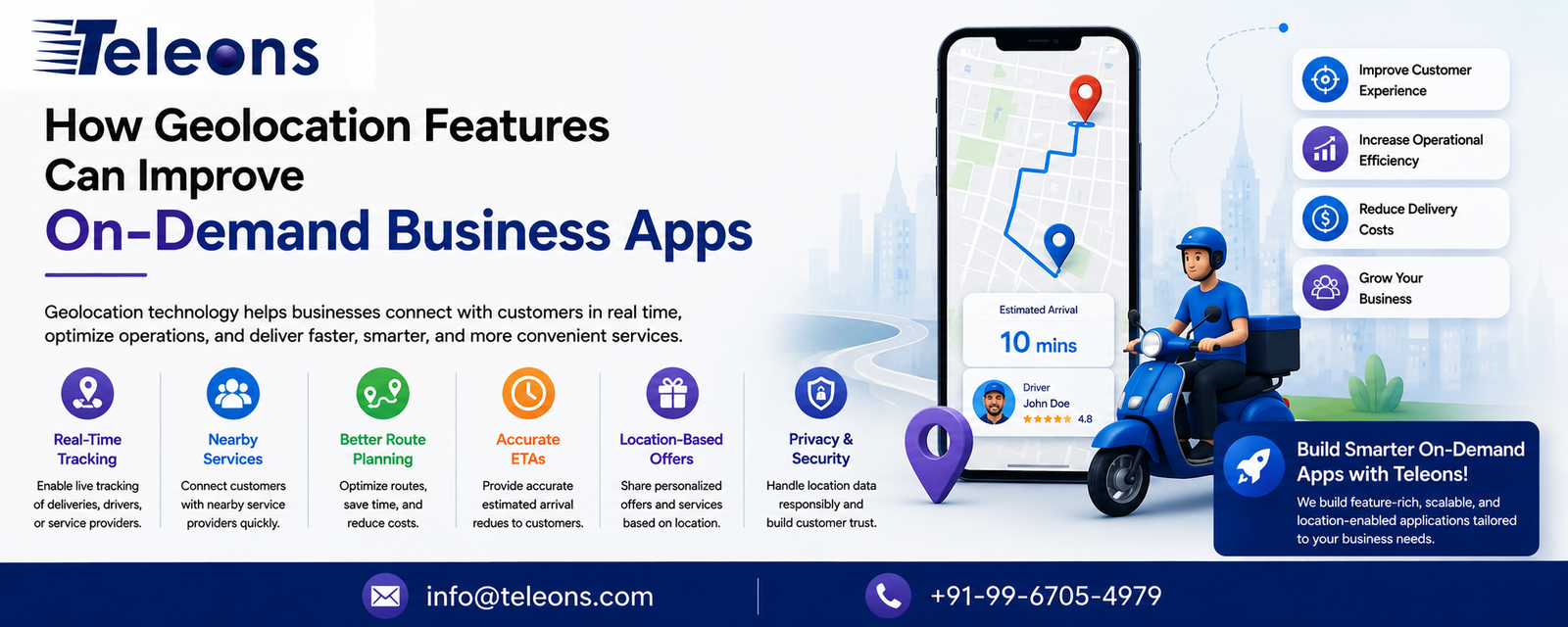
How Geolocation Features Can Improve On-Demand Business Apps
On-demand business apps are designed to provide products and services exactly when customers need them. Whether it is food delivery, transportation, home services, logistics, or…
Read More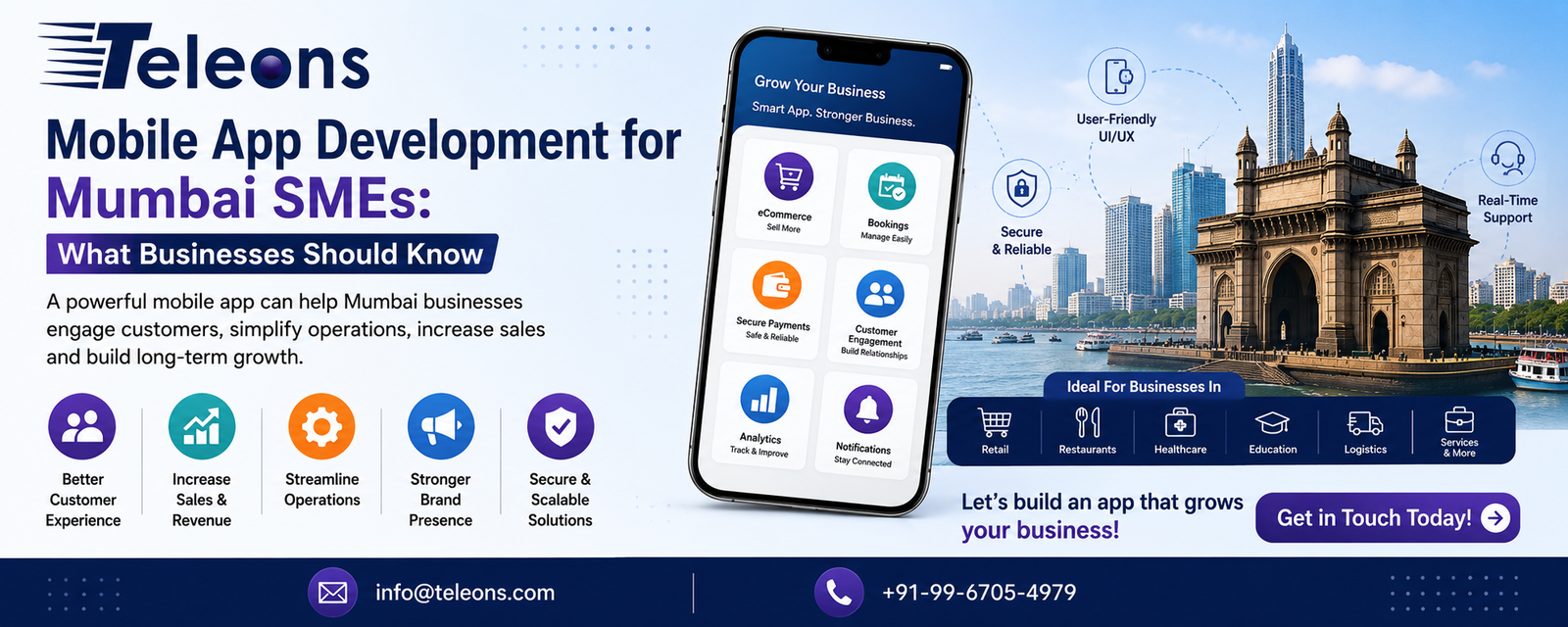
Mobile App Development for Mumbai SMEs: What Businesses Should Know
Mumbai is home to businesses across retail, restaurants, healthcare, education, finance, logistics, real estate, professional services and eCommerce. As customers increasingly use smartphones to discover…
Read More