




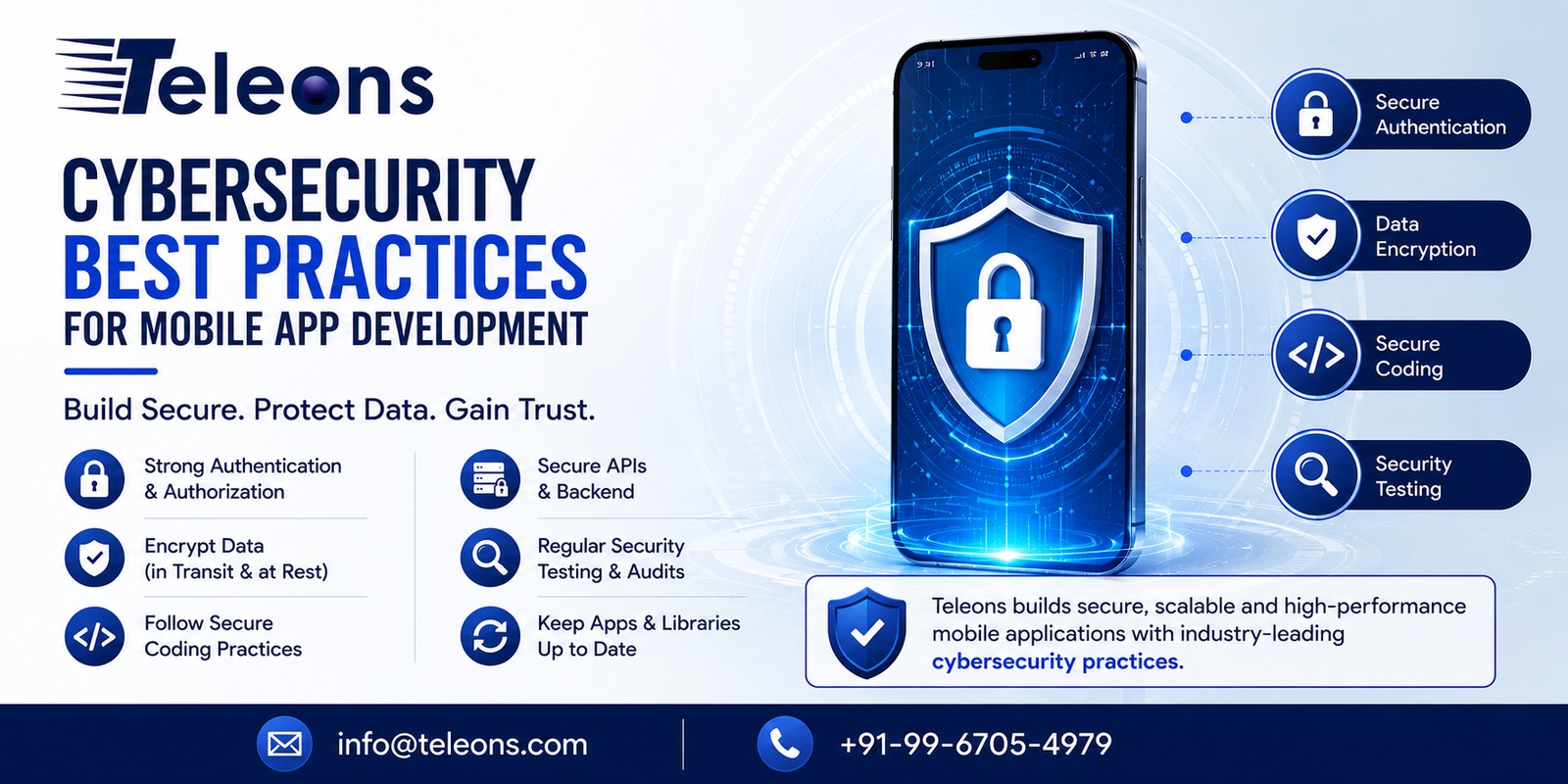
Mobile applications have become an essential part of modern business operations. From e-commerce and banking to healthcare and education, mobile apps handle vast amounts of sensitive user data every day. As cyber threats continue to evolve, ensuring robust security during the app development process is no longer optional—it’s a necessity.
A single security vulnerability can lead to data breaches, financial losses, reputational damage, and legal consequences. That’s why businesses and developers must prioritize cybersecurity at every stage of mobile app development.
In this guide, we’ll explore the most important cybersecurity best practices for creating secure mobile applications in 2026 and beyond.
Why Mobile App Security Matters
Cybercriminals frequently target mobile applications because they often contain valuable information such as:
Personal user data
Login credentials
Banking information
Payment details
Business data
Health records
Without proper security measures, attackers can exploit vulnerabilities to steal data, gain unauthorized access, or disrupt business operations.
Strong mobile app security helps:
Protect user information
Maintain customer trust
Ensure regulatory compliance
Prevent financial losses
Safeguard business reputation
Implement Secure Authentication and Authorization
Use Multi-Factor Authentication (MFA)
Multi-Factor Authentication adds an extra layer of security by requiring users to verify their identity through more than one method. This could include a password, a one-time passcode (OTP), or biometric verification. MFA significantly reduces the risk of unauthorized account access, even if login credentials are compromised.
Implement Biometric Authentication
Modern smartphones support biometric authentication methods such as fingerprint scanning and facial recognition. These technologies provide a secure and convenient way for users to access applications while minimizing the risks associated with weak passwords.
Enforce Strong Password Policies
Encourage users to create strong passwords that include uppercase letters, lowercase letters, numbers, and special characters. Password policies should also require periodic password updates and prevent the reuse of old passwords.
Utilize OAuth 2.0 Authentication
OAuth 2.0 enables secure authorization without exposing user credentials. It allows users to log in using trusted providers such as Google, Apple, or Microsoft while keeping authentication secure and streamlined.
Apply Role-Based Access Control (RBAC)
Role-Based Access Control ensures that users only have access to the information and features necessary for their specific role. This minimizes the risk of unauthorized access to sensitive business or customer data.
Encrypt Sensitive Data
Use AES-256 Encryption for Stored Data
AES-256 is one of the most secure encryption standards available today. Encrypting sensitive information stored within the app ensures that even if data is accessed by unauthorized users, it remains unreadable.
Implement HTTPS with SSL/TLS Certificates
HTTPS encrypts communication between the mobile app and the server, protecting data from interception during transmission. SSL/TLS certificates help establish secure connections and enhance user trust.
Encrypt Sensitive API Communications
APIs often transfer critical user information between the application and backend systems. Encrypting API communications prevents cybercriminals from capturing or modifying data during transmission.
Protect Databases with Encryption Layers
Databases storing customer information, payment details, or business records should be protected with multiple layers of encryption and access controls to prevent data breaches.
Follow Secure Coding Practices
Validate All User Inputs
Input validation ensures that only expected and safe data enters the application. Proper validation helps prevent common vulnerabilities such as SQL injection and command injection attacks.
Sanitize Data Before Processing
Sanitization removes harmful code and unwanted characters from user inputs before they are processed by the application. This reduces the risk of malicious scripts affecting system functionality.
Avoid Hardcoded Credentials
Embedding usernames, passwords, or API keys directly in source code can expose sensitive information. Instead, credentials should be securely stored using encrypted storage solutions.
Use Secure APIs
Developers should use APIs that follow industry security standards and regularly update them to address newly discovered vulnerabilities.
Regularly Review Source Code
Frequent code reviews help identify security weaknesses, coding errors, and compliance issues before they become exploitable vulnerabilities.
Protect APIs and Backend Services
Use API Authentication Tokens
Authentication tokens verify the identity of users and devices before granting access to backend resources. Tokens help secure API interactions and prevent unauthorized requests.
Implement Rate Limiting
Rate limiting restricts the number of requests a user or device can make within a specific timeframe. This helps protect systems from brute-force attacks and denial-of-service attempts.
Validate API Requests
Every API request should be verified to ensure it originates from an authorized source and contains valid parameters. Request validation reduces the risk of malicious activities.
Encrypt API Traffic
Encrypted API communications ensure that sensitive information remains protected while traveling between the mobile app and backend systems.
Monitor Suspicious Activities
Real-time monitoring and logging allow organizations to detect unusual API usage patterns and respond quickly to potential security threats.
Store Data Securely
Use Android Keystore and iOS Keychain
Both Android and iOS provide secure storage mechanisms designed specifically for sensitive information such as passwords, tokens, and encryption keys.
Encrypt Locally Stored Data
Data stored on the user’s device should always be encrypted to protect it from unauthorized access if the device is lost or stolen.
Remove Unnecessary Cached Information
Temporary files and cached data may contain sensitive information. Regularly clearing unnecessary cache reduces exposure to potential threats.
Store Sensitive Credentials Securely
Authentication tokens, API keys, and user credentials should never be stored in plain text. Secure encrypted storage methods should always be used.
Conduct Regular Security Testing
Vulnerability Assessments
Vulnerability assessments help identify known security weaknesses within the application, infrastructure, and backend systems.
Penetration Testing
Penetration testing simulates real-world cyberattacks to evaluate how effectively an application can withstand malicious attempts.
Static Application Security Testing (SAST)
SAST analyzes source code during development to identify vulnerabilities before the application is deployed.
Dynamic Application Security Testing (DAST)
DAST examines a running application to uncover security flaws that may not be visible during static analysis.
Code Security Audits
Comprehensive code audits provide detailed insights into security risks and help developers implement corrective measures.
Secure Third-Party Libraries and SDKs
Use Trusted Libraries Only
Developers should select third-party libraries from reputable sources with active support and strong security records.
Monitor Security Updates
Libraries and SDKs should be regularly updated to address newly discovered vulnerabilities and security patches.
Remove Unused Dependencies
Unused libraries increase the application’s attack surface and should be removed to minimize security risks.
Regularly Patch Vulnerabilities
Security patches should be applied as soon as they become available to protect the application from known exploits.
Implement Session Management
Set Session Expiration Timeouts
Automatic session expiration reduces the risk of unauthorized access when users leave their accounts unattended.
Re-Authenticate for Sensitive Actions
Critical actions such as changing passwords or processing payments should require users to verify their identity again.
Use Secure Session Tokens
Session tokens should be encrypted, unique, and difficult to predict to prevent session hijacking attacks.
Invalidate Sessions After Logout
Applications should immediately terminate active sessions when users log out to prevent unauthorized access.
Keep Applications Updated
Release Security Patches Promptly
Timely updates help address newly discovered vulnerabilities before cybercriminals can exploit them.
Monitor Emerging Threats
Security teams should continuously track evolving cyber threats and adjust defenses accordingly.
Upgrade Outdated Frameworks
Older development frameworks may contain security weaknesses. Upgrading to the latest versions improves security and performance.
Fix Known Vulnerabilities Immediately
Known vulnerabilities should be prioritized and resolved quickly to reduce the risk of attacks.
Comply with Security Regulations
GDPR Compliance
The General Data Protection Regulation helps protect personal data and privacy for users within the European Union.
CCPA Compliance
The California Consumer Privacy Act gives users greater control over how businesses collect and use their personal information.
HIPAA Compliance
Healthcare applications handling patient data must comply with HIPAA regulations to ensure confidentiality and security.
PCI DSS Compliance
Applications processing credit card payments should adhere to PCI DSS standards to protect financial information.
ISO 27001 Standards
ISO 27001 provides a framework for establishing, maintaining, and improving information security management systems.
These expanded sections help increase content depth, improve SEO relevance, and enhance user engagement for the Teleons blog.
Emerging Mobile Security Trends in 2026
AI-Powered Threat Detection
Artificial intelligence can identify suspicious behavior and prevent attacks in real time.
Zero Trust Security Models
Organizations are adopting Zero Trust frameworks that continuously verify user identities.
Biometric Authentication
Face recognition and fingerprint authentication continue to improve security and user convenience.
Secure Cloud Integration
Cloud-based applications require advanced encryption and access controls to remain secure.
Conclusion
Cybersecurity is a fundamental aspect of successful mobile app development. Businesses that prioritize security can protect customer data, strengthen brand trust, and minimize cyber risks.
By implementing secure coding practices, encryption, strong authentication, regular testing, and compliance measures, organizations can build mobile applications that remain resilient against evolving cyber threats.
Whether you’re developing a new Android app, iOS application, or cross-platform solution, investing in cybersecurity from day one is essential for long-term success.
Build Secure Mobile Apps with Teleons
Protect your users, data, and business with security-first mobile app development solutions from Teleons. Our experienced developers implement industry-leading cybersecurity practices to create secure, scalable, and high-performing mobile applications for Android, iOS, and cross-platform environments.
🚀 Turn Your App Idea into a Secure Digital Product
📞 : +91-99-6705-4979
🌐 : https://teleons.com/
Email: info@teleons.com
Get in touch now and build a mobile application that prioritizes security, performance, and user trust.
FAQs
1. Why is cybersecurity important in mobile app development?
Cybersecurity protects user data, prevents unauthorized access, and reduces the risk of cyberattacks and data breaches.
2. What is the most important security feature for a mobile app?
Strong authentication combined with data encryption is among the most critical security measures for any mobile application.
3. How can developers secure mobile app APIs?
Developers can secure APIs using authentication tokens, encryption, rate limiting, and regular security monitoring.
4. What is mobile app encryption?
Encryption converts sensitive information into unreadable code, ensuring data remains protected from unauthorized access.
5. How often should mobile apps undergo security testing?
Security testing should be conducted throughout development and regularly after deployment, especially after major updates.
6. What are common mobile app security threats?
Common threats include malware, data breaches, insecure APIs, phishing attacks, credential theft, and reverse engineering.
7. What is Multi-Factor Authentication (MFA)?
MFA requires users to verify their identity using multiple methods, such as passwords, OTPs, or biometrics.
8. Can third-party libraries create security risks?
Yes. Outdated or vulnerable libraries can introduce security weaknesses into mobile applications if not properly maintained.


Related Posts
App Store Optimization: How to Get More App Downloads
Building a mobile app is only the first step. The next challenge is getting people to discover, download and use it. With thousands of apps…
Read More
How Mobile Apps Help Businesses Improve Customer Engagement
Introduction Customer engagement has become a critical factor in building a successful business. Customers today expect brands to be accessible, responsive, personalized, and convenient across…
Read More