




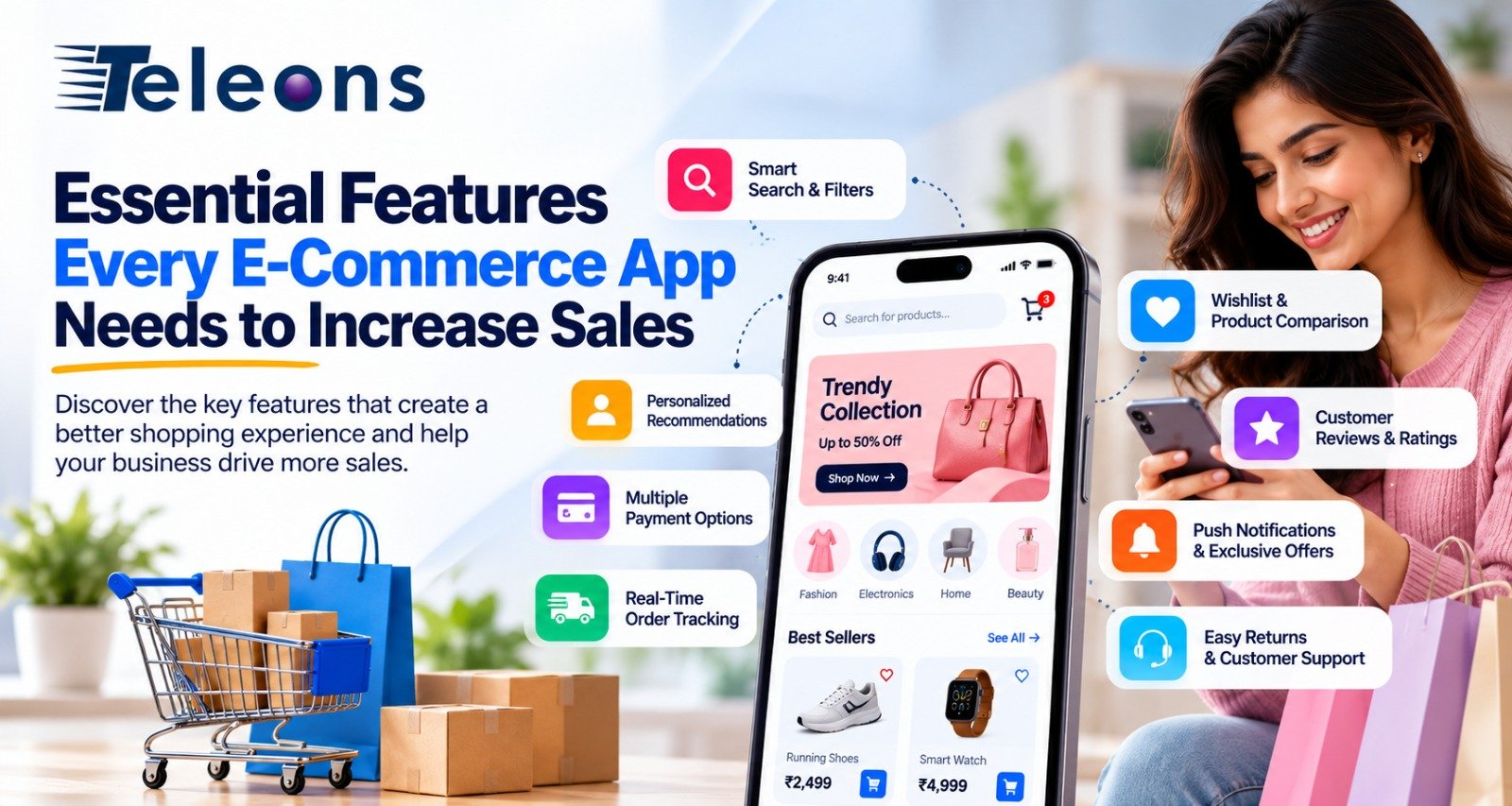
The way people shop has changed significantly. Customers now expect convenient, personalised, and secure shopping experiences directly from their smartphones. For businesses looking to expand their online presence, having an e-commerce mobile app is no longer just an additional sales channel. It is an opportunity to connect with customers, improve engagement, and generate more revenue.
However, simply developing an e-commerce app does not guarantee sales. Its success depends on the features, functionality, performance, and overall shopping experience it offers.
From intelligent product discovery to seamless checkout and personalised recommendations, the right features can influence purchasing decisions and encourage repeat orders.
In this guide, we explore the essential features every e-commerce app needs to increase sales and help businesses build a competitive online shopping experience.
User-Friendly Interface and Easy Navigation
First impressions matter when customers open a shopping application. A complicated interface or confusing navigation can discourage users from exploring products.
An effective e-commerce app should have a clean layout, clearly organised product categories, intuitive menus, and easy-to-understand navigation.
Important interface elements include:
Well-organised product categories
Simple navigation menus
Attractive product displays
Clear call-to-action buttons
Consistent design across screens
A user-friendly interface helps customers discover products quickly and move through the shopping journey without unnecessary steps.
Smart Product Search and Advanced Filters
Customers want to find products without spending too much time browsing. An advanced search system makes product discovery faster and more convenient.
E-commerce apps should include intelligent search functionality that understands customer queries and delivers relevant results.
Consider implementing:
Keyword-based product search
Search suggestions and autocomplete
Category-based filtering
Price range filters
Brand, size, colour, and rating filters
Sorting by popularity, price, and latest arrivals
For example, a customer searching for running shoes should be able to filter results by size, brand, price, and customer rating.
Better product discovery reduces browsing friction and helps customers find products that match their requirements.
Personalised Product Recommendations
Every customer has different shopping preferences. Personalised recommendations help businesses display relevant products based on customer interests and browsing behaviour.
AI-powered recommendation systems can analyse available shopping data to suggest products that customers may find useful.
Useful recommendation features include:
Recently viewed products
Recommended products
Frequently bought together
Similar product suggestions
Personalised offers
Related product collections
For example, when a customer purchases a smartphone, the application can recommend compatible cases, screen protectors, and accessories.
Relevant recommendations can increase product discovery, encourage additional purchases, and improve the shopping experience.
Wishlist and Product Comparison
Not every customer makes a purchase during their first visit. Some prefer to save products, compare alternatives, and make a decision later.
A wishlist feature allows users to save products they are interested in without adding them to the shopping cart immediately.
Product comparison functionality can also help customers evaluate multiple options based on price, specifications, features, and ratings.
Key capabilities include:
Save products for later
Create and manage wishlists
Compare multiple products
Receive price-drop notifications
Check product availability
These features make purchasing decisions easier and provide customers with more flexibility throughout their shopping journey.
Multiple Payment Options and Secure Checkout
Checkout is one of the most important stages of the e-commerce purchasing journey. A complicated payment process can result in abandoned carts and lost sales.
Businesses should provide a simple, secure, and convenient checkout experience.
Essential payment capabilities include:
UPI payments
Credit and debit cards
Net banking
Digital wallets
Cash on delivery, where supported
Saved payment methods through secure tokenisation
For Indian e-commerce businesses, supporting popular payment methods such as UPI can make transactions more convenient.
The checkout process should also include transparent pricing, delivery charges, applicable taxes, and order summaries before payment confirmation.
A secure payment gateway, encryption, and appropriate authentication mechanisms help protect sensitive customer information.
Real-Time Order Tracking and Delivery Updates
After completing a purchase, customers want to know when their orders will arrive.
An integrated order tracking system provides visibility into the delivery process and reduces uncertainty.
Important tracking features include:
Order confirmation
Order processing updates
Shipment tracking
Estimated delivery dates
Delivery notifications
Order history
Businesses can also integrate logistics and shipping APIs to provide real-time tracking information.
A transparent delivery experience helps build customer confidence and reduces the need for customers to contact support for routine order updates.
Push Notifications and Personalised Offers
Push notifications provide businesses with a direct communication channel to reach customers through their mobile devices.
When used strategically, they can encourage customers to revisit the application and discover relevant products or offers.
Useful notification types include:
New product announcements
Exclusive promotional offers
Abandoned cart reminders
Order status updates
Back-in-stock notifications
Personalised recommendations
For example, when a customer adds a product to their cart but does not complete the purchase, a timely reminder may encourage them to return.
Notifications should be relevant, appropriately timed, and based on customer preferences to avoid overwhelming users.
Customer Reviews and Ratings
Online shoppers often consider other customers’ experiences before purchasing a product.
Reviews and ratings provide valuable information that helps customers evaluate product quality, usability, and overall satisfaction.
An e-commerce application should support:
Star-based product ratings
Written customer reviews
Verified purchase indicators
Product photographs uploaded by customers
Review sorting and filtering
Helpful review voting
Authentic customer feedback improves transparency and helps shoppers make informed purchasing decisions.
Businesses should also provide tools to moderate inappropriate or fraudulent reviews while maintaining genuine customer feedback.
Customer Support and Live Chat Integration
A smooth shopping experience should include assistance whenever customers have questions or encounter problems.
Integrated customer support helps businesses resolve queries related to products, payments, deliveries, returns, and refunds.
Useful support features include:
In-app live chat
Chatbot assistance
Frequently asked questions
Support ticket management
WhatsApp integration
Order-related support
AI-powered chatbots can handle common queries and provide basic assistance around the clock, while complex issues can be transferred to human support representatives.
Accessible customer support improves service quality and helps build long-term customer relationships.
Easy Returns, Refunds, and Order Management
A clear return and refund process can influence a customer’s decision to purchase from an online store.
Customers are more comfortable shopping when they understand what happens if a product is damaged, incorrect, or unsuitable.
An effective e-commerce app should provide:
Easy return requests
Refund status tracking
Order cancellation options
Exchange requests
Return policy information
Digital invoices and order records
Businesses should integrate these features with their inventory and order management systems to streamline operations.
Loyalty Programs and Referral Rewards
Attracting new customers is important, but retaining existing customers is equally valuable.
Loyalty and referral programmes encourage customers to continue shopping and recommend the application to others.
Popular loyalty features include:
Reward points for purchases
Membership tiers
Exclusive member discounts
Referral reward systems
Special birthday offers
Redeemable shopping credits
For example, customers can earn reward points on eligible purchases and redeem them during future transactions.
These programmes can encourage repeat purchases and strengthen customer relationships.
Analytics and Business Performance Tracking
An e-commerce application should help business owners understand customer behaviour and measure sales performance.
Analytics tools provide insights into how customers interact with the app and where improvements may be required.
Important performance metrics include:
Total sales and revenue
Conversion rate
Cart abandonment rate
Average order value
Customer retention rate
Most viewed products
Customer acquisition sources
Integration with analytics platforms such as Google Analytics 4 can help businesses understand user journeys and make informed marketing decisions.
Data-driven improvements allow businesses to optimise their application and identify opportunities for growth.
Additional Considerations for a Successful E-Commerce App
Beyond customer-facing features, businesses should consider the technical capabilities that support long-term application performance.
Application Performance and Speed: Fast-loading screens, optimised images, and efficient database queries help deliver a smooth shopping experience.
Scalable Architecture: The application should support increasing users, products, and transactions as the business expands.
Data Security: Secure authentication, encrypted communication, and appropriate access controls help protect customer and business information.
Third-Party Integrations: Payment gateways, shipping services, CRM platforms, inventory systems, and marketing tools can improve operational efficiency.
Regular Updates and Maintenance: Continuous monitoring, bug fixes, security updates, and feature improvements help maintain application quality.
How to Choose the Right Features for Your E-Commerce Business
Not every e-commerce business needs every feature from the beginning. The right selection depends on the business model, target audience, product category, budget, and growth objectives.
Consider the following factors before starting development:
Understand your customers: Identify their shopping habits, expectations, and preferred payment methods.
Define your business requirements: Determine whether you need a B2C, B2B, marketplace, or single-vendor shopping application.
Prioritise essential functionality: Start with product discovery, cart management, checkout, payments, and order tracking.
Choose suitable technologies: Select a technology stack that supports performance, security, and future expansion.
Plan for scalability: Make sure the application can accommodate additional products, customers, and integrations.
Evaluate performance regularly: Use customer feedback and analytics to identify opportunities for improvement.
A well-planned development strategy ensures that your application supports both immediate business requirements and future expansion.
Why Choose Teleons for E-Commerce App Development?
Building a successful e-commerce application requires more than technical development. It requires an understanding of customer expectations, business operations, user experience, and the technology needed to support online sales.
Teleons helps businesses transform their e-commerce ideas into functional, scalable, and user-friendly digital applications.
Our development approach focuses on:
Custom e-commerce mobile application development
Android and iOS app development
Intuitive UI/UX design
Secure payment gateway integration
Product catalogue and inventory management
Third-party API integrations
Order and delivery management
Application testing and deployment
Ongoing maintenance and technical support
Whether you are launching a new online store or upgrading an existing shopping platform, Teleons can help you develop an application aligned with your business goals.
Conclusion
A successful e-commerce application combines convenience, functionality, security, and personalisation to create a better shopping experience.
Features such as intelligent product search, secure payments, personalised recommendations, order tracking, loyalty programmes, and customer support can help businesses improve customer engagement and create more sales opportunities.
However, the real difference comes from choosing features that align with your customers’ expectations and business objectives.
With the right development strategy and technology partner, your e-commerce app can become a powerful platform for building customer relationships and growing your online business.
Build smarter. Sell better. Grow faster with Teleons.
Ready to build an e-commerce app that delivers a better shopping experience?
Visit https://teleons.com/ to explore our mobile app development services.
Email: info@teleons.com
Phone: +91-99-6705-4979
Frequently Asked Questions (FAQs)
1. What are the most important features of an e-commerce app?
The most important features include user-friendly navigation, smart product search, product recommendations, shopping carts, secure payment gateways, order tracking, push notifications, customer reviews, and customer support.
2. How can an e-commerce app help increase sales?
An e-commerce app can support sales growth through personalised recommendations, convenient checkout, targeted notifications, loyalty programmes, and improved product discovery. These features help reduce shopping friction and encourage repeat purchases.
3. Is AI important for modern e-commerce applications?
AI can improve e-commerce applications through personalised product recommendations, intelligent search, automated customer support, demand forecasting, and customer behaviour analysis.
4. Which payment methods should an e-commerce app support in India?
Depending on the target audience and payment provider, an Indian e-commerce app can support UPI, credit cards, debit cards, net banking, digital wallets, and cash on delivery.
5. How much does it cost to develop an e-commerce mobile app?
The cost depends on application complexity, platform selection, UI/UX requirements, integrations, security requirements, and custom functionality. A basic shopping application generally requires less investment than a feature-rich marketplace with advanced integrations.
6. How long does it take to develop an e-commerce app?
Development timelines depend on the scope and complexity of the application. A basic application may take a few months, while a more advanced platform with custom integrations and extensive functionality may require additional development and testing time.
7. Can an e-commerce app integrate with an existing website?
Yes. An e-commerce application can integrate with an existing website, product catalogue, inventory system, payment gateway, and order management platform through APIs and other supported integrations.


Related Posts
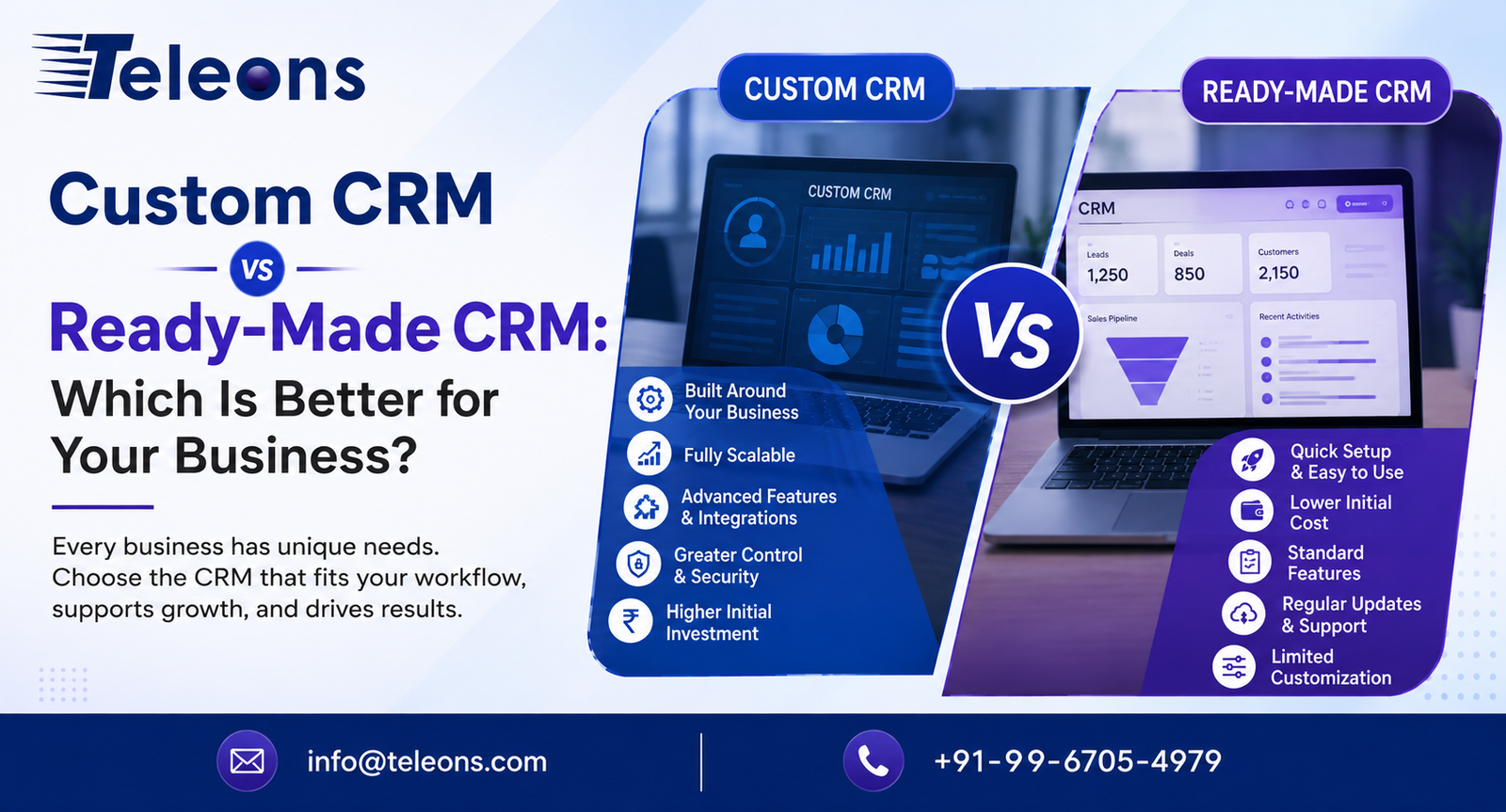
Custom CRM vs Ready-Made CRM: Which Is Better for Your Business?
Customer relationships are at the center of every growing business. As the number of leads, customers, sales activities, and follow-ups increases, managing customer information through…
Read More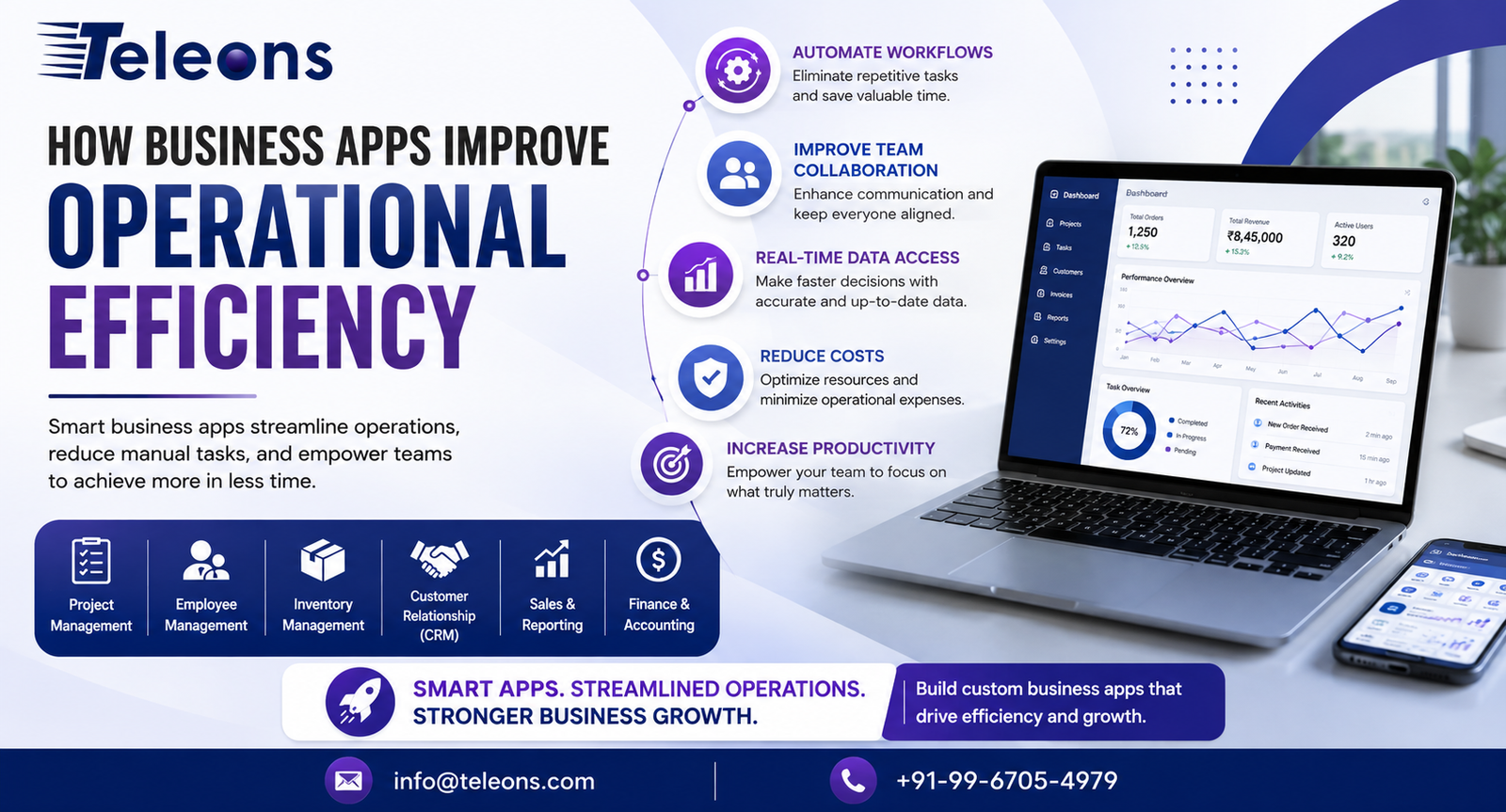
How Business Apps Improve Operational Efficiency
In today’s competitive business environment, efficiency is the key to sustainable growth. Companies are constantly looking for ways to streamline operations, reduce manual work, and…
Read More